



The Ar(t)chitecture of Tadashi Kawamata: Between disruption and reconciliation
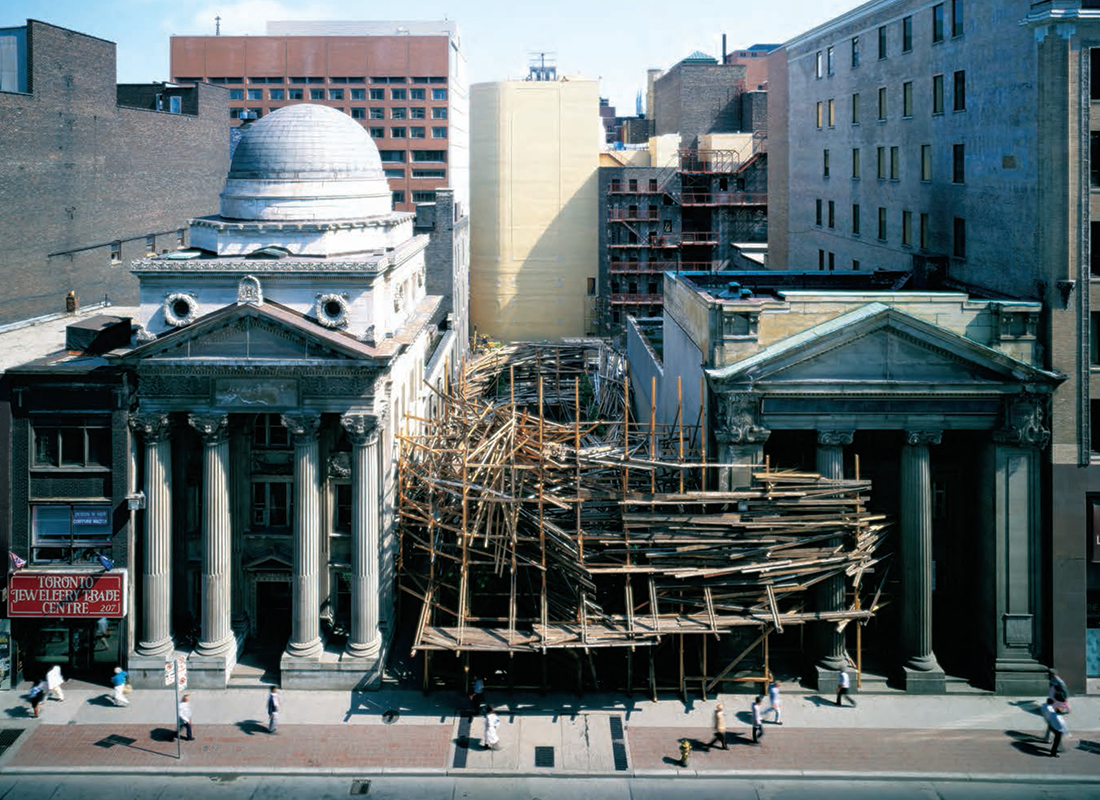
Art begins not with the flesh, but with the house.
That is why architecture is the first of the arts.
—Gilles Deleuze and Félix Guattari 1
Tower, detour, contour
In the summer of 2013, in one of Parc de la Villette meadows, in the 19th arrondissement of Paris, Tasdashi Kawamata, an artist of Japanese origin, was entrusted with building a tower made of recycled or recyclable wooden planks. This tower, the highest the artist has created in France, was 21 metres high and 12 metres in diameter. Begun on April 17, the work in progress was visible until August 21, 2013. In June, a metal spiral staircase in the centre of this enormous, constantly changing structure allowed the public to visit the inside and have a good look around. Arriving at the last platform, one could see the canal de l’Ourcq running through the park in the distance, as well as various public buildings such as the Museum of Science and Industry and the Cité de la Musique. And when mounting and descending the staircase, visitors could also observe a collection of everyday objects made of wood that were integrated into the structure, representing familiar pieces of furniture for the most part.
Titled Collective Folie, this tower, designed for the Parc de la Villette,2 makes discreet reference to Swiss architect Bernard Tschumi’s constructed installations called Folies. Tschumi, who was entrusted with the park’s conception in the 1980s, designed twenty-six architectural structures made of metal
…