



The Diorama as Artistic Process
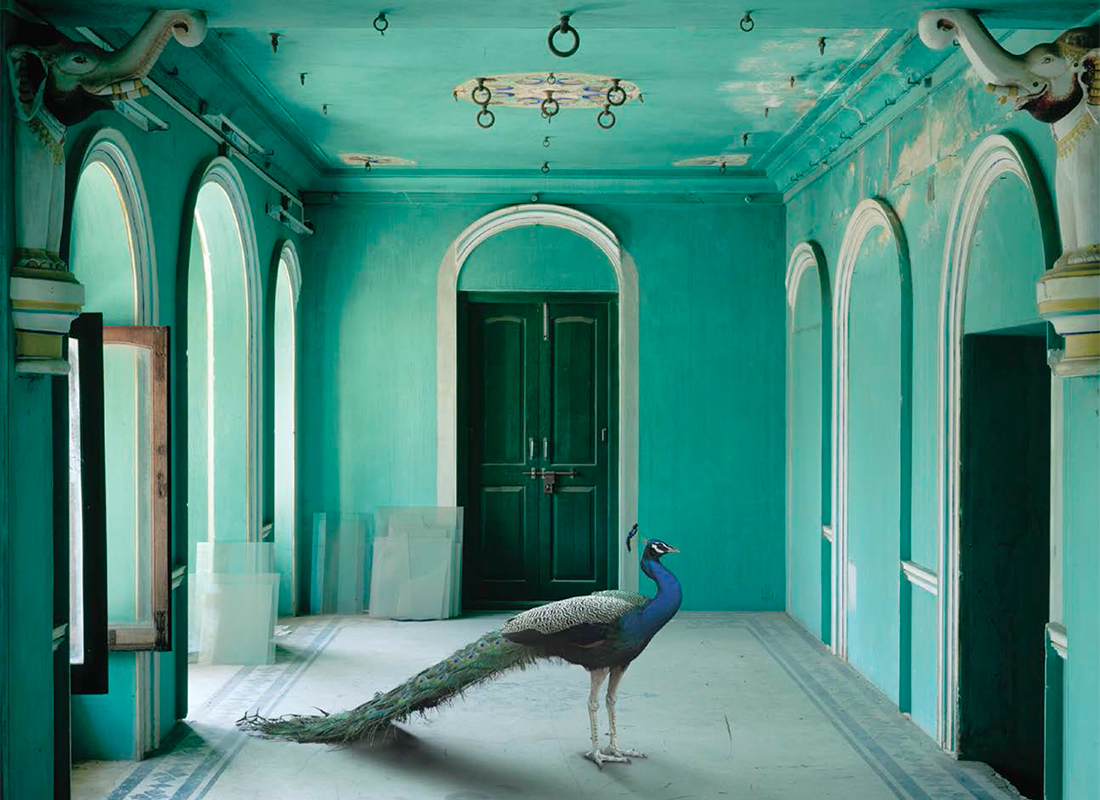
In an 18th century Parisian drawing room, a fox sits enthroned on the divan of a duchess. The animal seems absorbed by a pigeon perched the decorative back moulding, wings spread, readying perhaps to fly off. In the centre of a reception hall with walls covered in crimson fabric, two stags are about to charge each other while royal guests look on. These two works from Karen Knorr’s series Fables (2003-2008), the first staged in a room with wainscoting from Hôtel de Broglie and shown at Musée Carnavalet, and the second staged in the Salon Rouge of Château de Chambord, are not, strictly speaking, dioramas. They are photographs of taxidermied animals that no longer occupy completely recreated natural environments as museum exhibits, but rather domestic interiors that have been reconstructed and institutionalized as period rooms.
Reflecting on the relationship between taxidermy and dioramas, Giovanni Aloi notes that several contemporary artists, including Knorr, have turned the camera lens to this museological device in a process that he describes as “the attempt to undo the intended seamless continuity with life that makes the display so seductive.”1 Aloi maintains that, in Fables, animals have “escaped the diorama” and that Knorr works “outside” it to deconstruct the illusion and revise the contemporary signification of this exhibition strategy. Playing on the double meaning of the word “shot” (as “photograph” and “gunshot”), Aloi suggests that photography enables Knorr to bring the hunter’s “shot” that killed the animal displayed in the diorama back
…