



Bête Noire by Kent Monkman. Revenge by Diorama
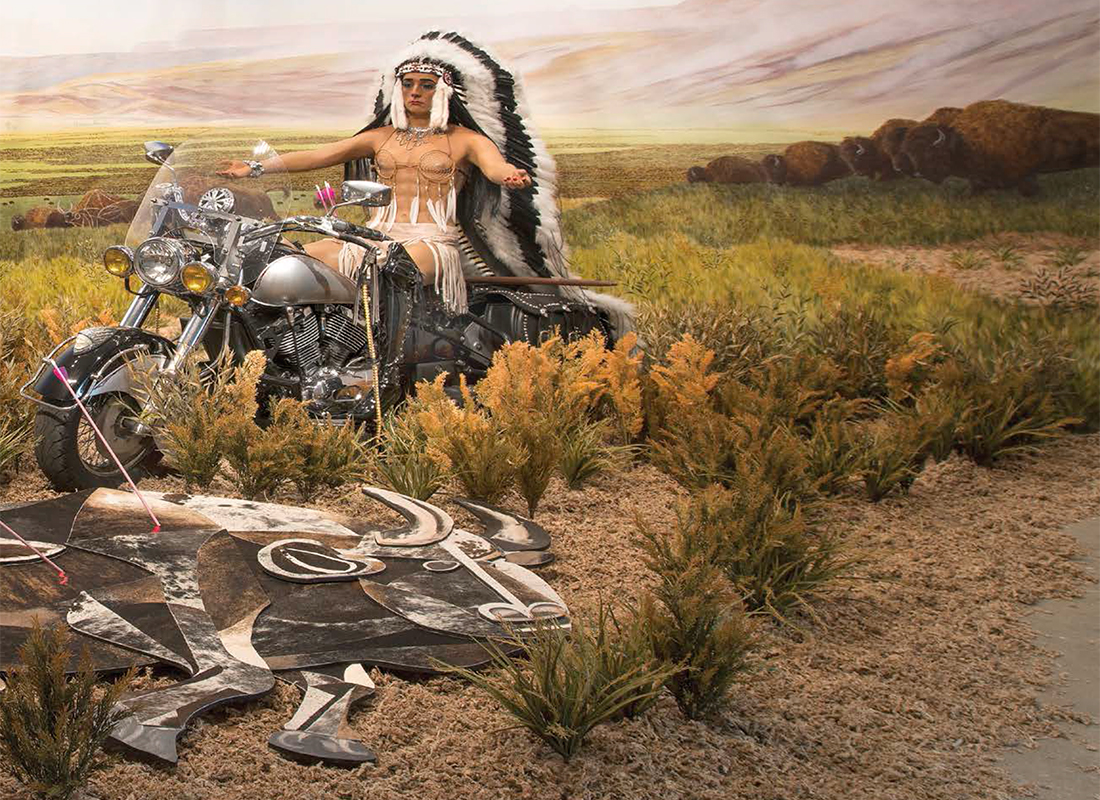
The first dioramas to represent animals in their natural habitat were introduced into North American natural history museums at the end of the 1880s. Although these displays were directly inspired by the dioramas Louis Daguerre had devised in 1822, they differed with regard to one crucial point: the introduction of the third dimension. While Daguerre’s dioramas were above all theatrical shows that sought to create the illusion of reality through lighting effects on scenes painted on both sides of a canvas, the museum dioramas achieved this in a far more effective way by playing on the visual contiguity between a three dimensional scene, containing one or several figures, and a panoramic backdrop painted in trompe-l’oeil.1 This new display, which strove to be both educational and entertaining, presented a strange mixture of reality and fiction. On the one hand, the fur or plumage of stuffed animals and the plant elements that were added after each expedition to the represented site, and on the other, a painted landscape and setting, as well as figures that were carefully sculpted to reproduce a sense of live action. To this end, these figures, which made up the initial museum dioramas, were first meticulously shaped in clay to render the slightest details of the animals’ anatomy and then covered with the skin layer.2 The result of the display was spectacular: the public, viewing the scene from behind a glass pane, was literally immersed in a natural environment with an illusionistic effectiveness that had never
…