



Man and Machine in Sculpture and in War Alike
Prologue
The history of every art form shows critical epochs in which a certain art form aspires to effects which could be fully obtained only with a changed technical standard, that is to say, in a new art form. The extravagances and crudities of art which thus appear, particularly in the so-called decadent epochs, actually arise from the nucleus of its richest historical energies.
— Walter Benjamin (1936)1
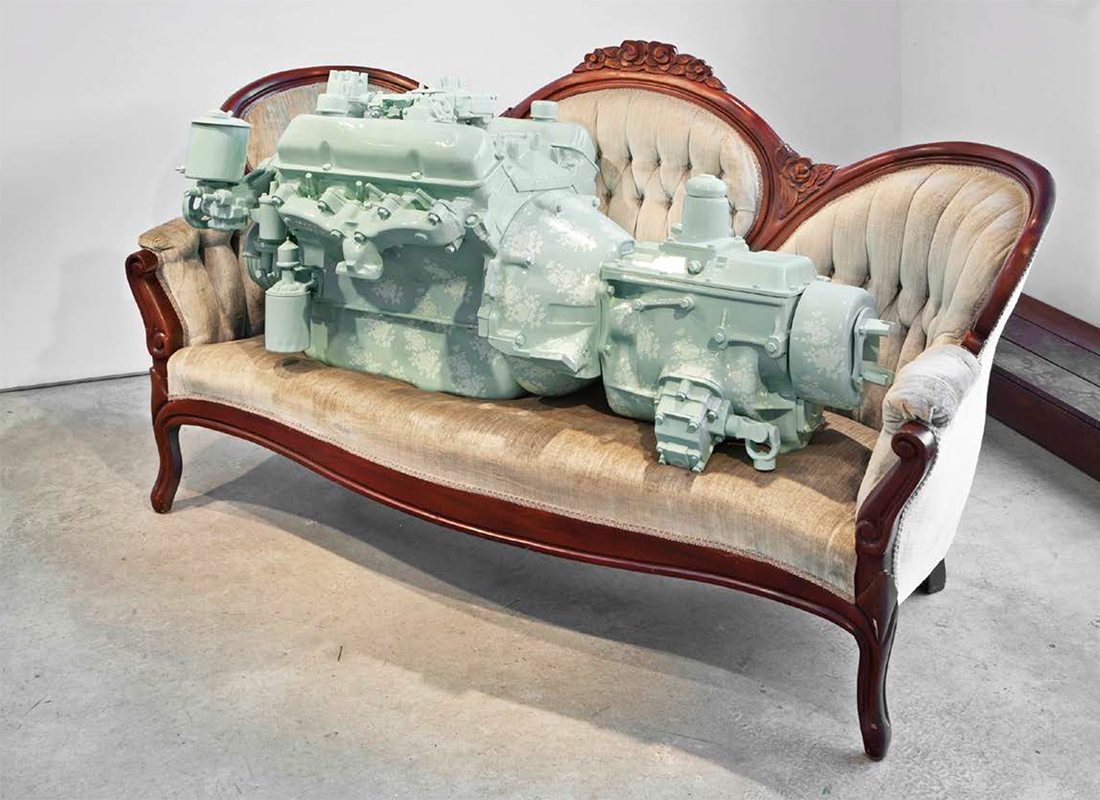
Although sculpture first was made by shaping stone, it has since been produced in many materials, whether hard or soft, rigid or flexible, and by way of constantly renewed techniques. It is in the apparent porosity of its specificities that sculpture, in its current form, is viewed differently here so as to reflect on how man works material in a socio-political context of conflict. In appropriating the concepts of catastrophe and armed conflict through sculpture today, Ben Jackel, Clint Neufeld and Charles Krafft endow emblematically tough and masculine objects with a fragile quality. The sculptures of these three artists address notions of the machine, catastrophe and war, and are variously comprised of motors, jets, tanks or guns, which have become aestheticized objects stripped of their initial function.
For Ben Jackel, using stoneware to construct catastrophe and war devices has led to the production of politically charged objects without technological input; for Clint Neufeld, a former soldier, transforming motors into delicate ceramic pieces makes it possible to revisit the concept of masculinity; while Charles Krafft intertwines
…